Silicone vs. Fabric Mermaid Tails — Which Is Right for You?
If you've spent any time in the mermaiding community, you already know this question comes up constantly, in Facebook groups, in YouTube comments, at pool meetups, in every corner of the mermaid internet. And it makes complete sense. Choosing your tail is one of the most personal, exciting, and occasionally overwhelming decisions you'll make as a mermaid.
The good news? There's no wrong answer. Every mermaid's journey is different, and the right tail for you depends on where you are right now, your skill level, your goals, your budget, and what mermaiding means to you.
At MerNation Studios, we live and breathe this world, and we've talked with hundreds of mermaids at every point in their journey. So let's break it all down, honestly and warmly, so you can make the choice that's right for you.
First, Let's Talk About What's Actually Out There
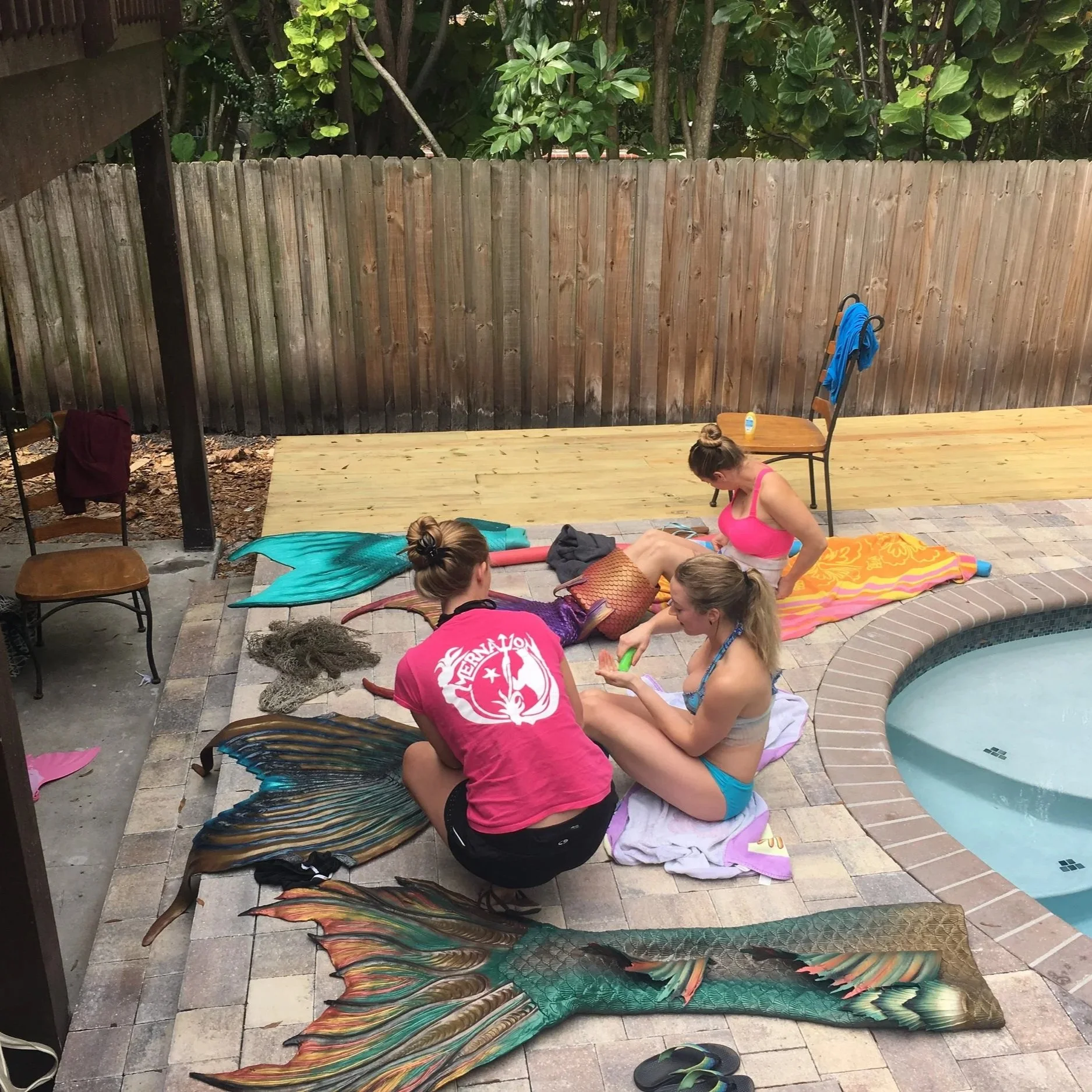
Before we dive into the comparison, it helps to understand that "mermaid tail" is a broad category. Here's a quick overview of the main types you'll encounter:
Fabric Tails are made from stretchy materials like spandex or scuba-knit fabric. They come in a wide range of colors and designs, fit like a pair of pants, and require a separately inserted monofin to swim. They're lightweight, easy to travel with, quick to dry, and often more affordable than silicone (though not always!). This is where most mermaids start, and many seasoned professionals still reach for a fabric tail for casual training swims.
Hybrid Tails sit between fabric and full silicone. Typically built on a neoprene base with silicone or resin scales and a silicone fluke, they offer more realism than fabric without the full weight and cost of a complete silicone tail. They're a great stepping stone for mermaids who want that next level of visual impact before committing to silicone. However, durability is questionable and often sub par materials may be used.
Silicone Tails are the pinnacle of the mermaid world, handcrafted, fully custom pieces made entirely from platinum-cure silicone and cast to your exact measurements. They're the most realistic, the most durable, and the most breathtaking things you can wear in the water. They're also the most significant investment, both financially and in terms of the care and commitment they require.
For this post, we're focusing on the big comparison: fabric vs. silicone. Let's get into it.

The Case for Fabric Tails
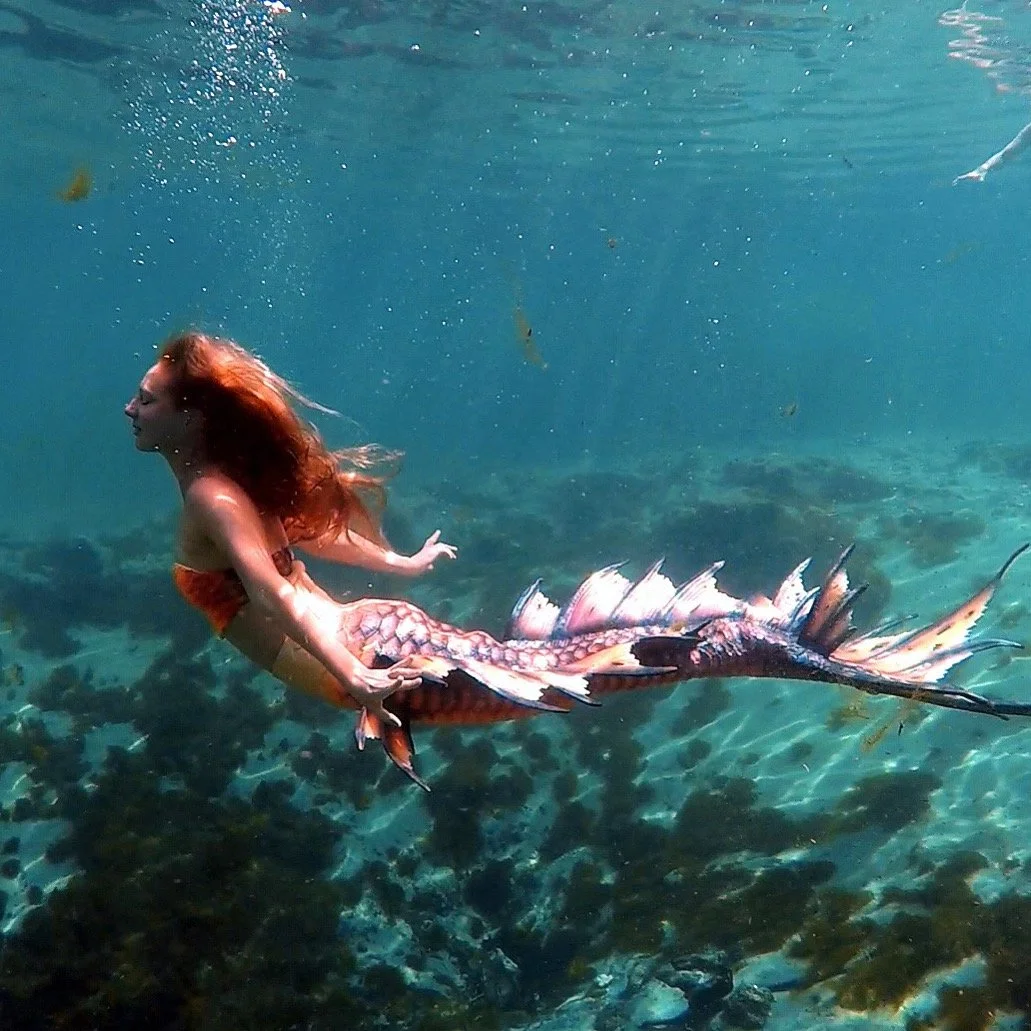
Fabric tails deserve far more credit than they sometimes get. Here's why they're genuinely wonderful, and why even experienced mermaids keep them in their rotation.
They're beginner-friendly in every way. If you've never swum in a mermaid tail before, fabric is where you should start…full stop. They're easier to put on, easier to move in, and crucially, easier to remove quickly if you ever need to in an emergency. Learning the dolphin kick and building your comfort in the water is so much easier without the added weight and complexity of a silicone tail.
They're light and travel-ready. Fabric tails fold up, fit in a bag, and dry in minutes. For mermaids who travel to events, retreats, photoshoots, or open water swims, this is genuinely valuable. You're not lugging around 15–25 pounds of silicone, you're packing something closer to a swimsuit.
They let you experiment with your identity. One of the most joyful parts of mermaiding is developing your mersona, your mermaid character and aesthetic. Fabric tails are often affordable enough that you can try a few different colors and styles before you land on the palette that truly feels like you. That's actually great preparation for eventually commissioning a silicone tail, because you'll know exactly what you want.
They're great for training. Many professional mermaids — people who perform in high-end silicone tails for a living — train primarily in fabric. Fabric tails are lighter and faster in the water, which makes them ideal for building dolphin kick technique, core strength, and breath control without fighting against extra weight.
Who fabric tails are perfect for:
- Beginners and new mermaids
- Children (fabric is also safer for young swimmers, as it can be removed more quickly)
- Mermaids on a budget who want to get in the water now
- Experienced mermaids who want a lightweight option for training and casual swims
- Anyone exploring their mermaid identity before investing in custom silicone

In my first fabric tail!
The Case for Silicone Tails
Now let's talk about silicone, because if you're reading this, there's a part of you that's already dreaming about it.
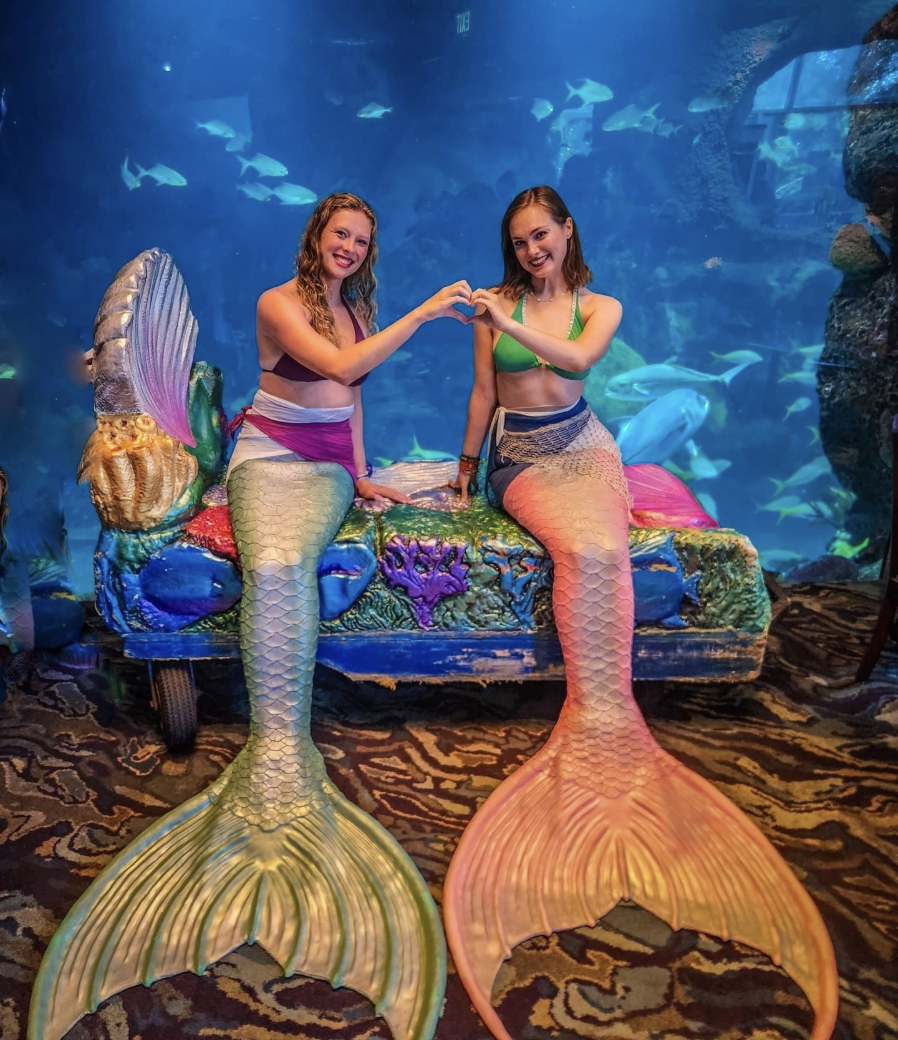
The realism is unmatched. This is simply true. No fabric tail, no matter how beautifully made, looks like a silicone tail in person. The way the scales catch the light, the weight and movement, the three-dimensional texture, the seamless fit against your body, silicone creates an effect that makes people genuinely do a double-take. It's the difference between looking like someone wearing a mermaid costume and looking like an actual mermaid. This is why silicone tails are the industry standard for aquariums, film and TV productions, and high-end professional performance.
They're made entirely for you. A custom silicone tail is built to your exact measurements, your proportions, your body shape, your design vision. The result is a fit that no off-the-shelf tail can match, which means better comfort, better swimming performance, and a tail that feels like an extension of your body rather than something you're wearing on top of it.
They last. A well-made, well-cared-for silicone tail can last for many years of regular use. When you think about the cost per use over that lifespan, the investment starts to look very different. Fabric tails, while wonderful, simply don't have the same durability under heavy or repeated use.
They elevate your photography and content. If you create underwater content, model for photographers, or want your mermaiding documented beautifully, a silicone tail is transformative. The camera loves silicone in a way that's genuinely striking, and the images you'll get will be on a completely different level.
They signal professionalism. For mermaids pursuing paid work, whether at aquariums, events, on film sets, or in their own mermaid business, a professional-grade silicone tail is often a requirement, not a luxury. It tells clients, venues, and casting teams that you're serious about your craft.
They feel extraordinary. This is hard to quantify but impossible to overstate. The experience of being in a silicone tail, the weight, the buoyancy, the way it moves with you, is unlike anything else in the water. Mermaids who make the switch consistently describe it as a completely different experience from anything they'd felt before.
Who silicone tails are perfect for:
- Experienced mermaids who are deeply committed to the craft
- Professional mermaids or those pursuing paid work
- Mermaids who create underwater photography or video content
- Those who want the absolute pinnacle of realism and visual impact
- Anyone ready to invest in their passion for the long term
The Honest Tradeoffs
In the spirit of keeping it real with you, because that's how we like to operate at MerNation, here's an honest look at the tradeoffs on both sides.
Silicone requires commitment. Getting into a silicone tail takes time, practice, and a good water-based lubricant (diluted conditioner is our fav hack!). You won't be slipping it on poolside in thirty seconds. You also need to be a strong, confident swimmer before swimming in silicone, they're heavier and create more drag than fabric tails, and they can't be removed quickly in the water. Always swim with a buddy in a silicone tail.
Silicone requires care. Rinse after every swim, store flat in a cool dry place, keep away from sharp objects and oil-based products, and handle with love. It's not high-maintenance in a burdensome way, but it does require a genuine care routine. Your tail will reward that care with years of beauty and performance.
Silicone is a significant financial investment. Custom silicone tails typically start around $2000 and can go up to $6,000 or beyond depending on complexity and maker. This is not a casual purchase, it's a commitment. And that's exactly as it should be. Please don't rush into it before you're ready.
Fabric tails have their limits. For professional performance settings, high-end events, aquariums, and film work, fabric tails typically won't meet the mark. And while they're wonderful for training and recreation, they simply don't deliver the visual impact that silicone does for photography, content creation, or stage performance.
So... Which Should You Choose?
Here's our honest advice:
Start with fabric if you're new to mermaiding, you're still developing your swimming skills, you're not yet certain how serious you want to get about the craft, you're shopping for a child, or your budget isn't quite there yet. Get in the water, fall in love with the feeling, build your skills, and let the dream of silicone be the horizon you're swimming toward.
Choose silicone if you're an experienced, strong swimmer who is deeply passionate about mermaiding, you're pursuing or planning to pursue professional work, you create underwater content, or you're simply ready to make that long-term investment in the craft you love. When the time is right, you'll know.
And remember: many mermaids own both, and use them for different purposes. There is no hierarchy here! Just different tools for different moments in your mermaid journey.
When You're Ready for Silicone, We're Here
At MerNation Studios, we craft custom professional silicone tails for mermaids who are ready to take the plunge. Every tail we make is handcrafted from premium platinum-cure silicone, built to your exact measurements, and designed to bring your unique mermaid vision to life.
We love working with mermaids at every stage of their journey, whether you're commissioning your very first silicone tail or upgrading to something even more extraordinary. When you're ready to talk about what's possible, we'd love to hear from you.
👉 [Explore custom silicone tails from MerNation Studios — and start designing your dream tail today.]